
We would all like to do more traveling. But one way you can feel better about staying at home is that your digital presence has seen more of the world than most astronauts Our image, voice, writing, opinions – our personalities – move at the speed of light, across multiple locations simultaneously, and are being used by the richest companies in the history of the world to become even richer.
A viral tweet “If you are not paying for it, you’re not the customer; you’re the product being sold” was posted by dot-com mover/shaker Tim O’Reilly in 2010. He was quoting one Andrew Lewis who had been commenting on Metafilter about the news aggregation website Digg.
But the expression – and the concept – has a much older history, and was probably articulated into the culture in 1973 by filmmakers Richard Serra and Carlota Fay Schoolman in their a short film Television Delivers People.
The film offers a simple text scroll on a screen, as bland as a government public service announcement, backgrounded by a wretchedly generic music, of insights about the danger of mass media controlled by a handful of hyper-capitalists. Messages include:
“The Product of Television, Commercial Television, is the Audience”
“In commercial broadcasting, the viewer pays for the privilege of having himself sold”
“You are the end product delivered en masse to the advertiser.”
And so forth
Watch Television Delivers People in full here:
The project reached its fruition when two filmmakers bought TV airtime and broadcast their “anti-advertisement” in Chicago and Amarillo, Texas.
Some look back on the days of 1970s TV with longing for a simpler, freer time, with the launch of PBS in the US, and a BBC that was collaborating with the likes of Dennis Potter and John Cleese to produce some of the best TV ever made.
Today, Serra and Schoolman’s depiction of the audience as product has evolved to extremes that the two artists would probably have found too absurd to be believable. Companies using gen AI are harvesting every bit of data you produce – from the distance etween your eyes to the movement of your body to the pictures your kid drew at school that you posted online – in order to create digital assets that can be – or so they hope – sold. To other companies, or even back to you, as content.
But don’t you have a right to your own likeness, the way you talk, the thoughts you think? Shouldn’t you get compensation for education the next generation of computer intelligence?
That depends who you talk to.
College dropout Sam Altman, believes we’re living in a “post-copyright world”, where the traditional laws of intellectual property are falling away in favor of a free-for-all that, ironically, benefits his own business model. Given this attitude to years of established copyright law, he is unlikely to have respect for your ownership over your personal characteristics – where the copyright law is still vague.
Gen AI’s claim to producing original content relies on the fact that there is no obvious single human that can be pointed to as its source. In the absence of a clear author, surely Open AI (or pick your platform) must be the one, original source. It’s a “finders keepers” take on copyright law – a kind of digital colonialism. If your movie, art, face, sexts appear as part of Gen AI output, about your only recourse is a sternly worded email.
But over the past year, there has been some pushback – humble attempts to create legal levees against the Gen AI hurricane. Denmark has proposed a law that would give citizens rights to compensation if their likenesses are used without their express consent. The principle targets of this legislation is tackling deepfakes which can now be manufactured by anyone in the with access to your image and an internet connection.
While deepfakes may violate the terms of service of some – not all – digital platforms, combatting them is often left to the platform’s discretion. What you may find threatening, Elon Musk may think is just a bit of boyish fun. When they face legislation however, media companies can start taking things seriously surprisingly fast. Establishing protocols and legal frameworks around what is real and what is not, and what rights platforms and individuals do or don’t have, is essential to the development of the content world.
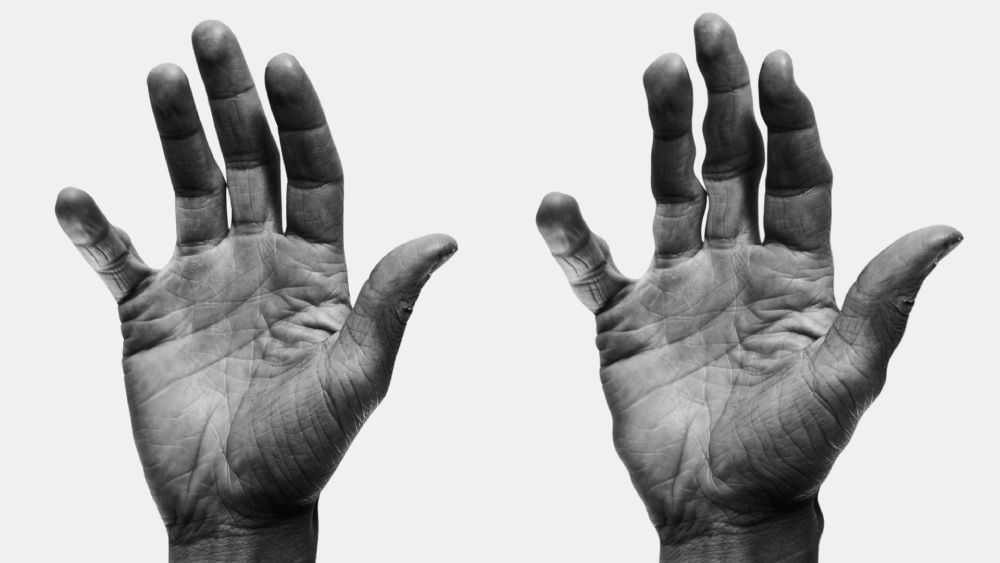
Getting a HANDle on your identity
Will Kreth had been the executive director of the Entertainment ID Registry (EIDR), which provides unique identifiers for audiovisual content, when in 2018 he was asked by CAA to help develop a unique identifier for talent and public figures – that is, “personhood credentials”.
The result was HAND (Human & Digital), established as a non-profit trade association in April 2025. HAND offers a registry, built on the Digital Object Identifier (DOI) system – ISO 26324.2025 – for uniquely identifying the name, image, likeness, and voice (NILV) of talent across digital content. HAND is the first Talent ID registry to be recognized by the non-profit DOI Foundation. You might think of HAND as the talent-side complement of the EIDR, which since 2010 has been providing unique ID’s for pieces of content.
“How do you know when you’re dealing with a person who is living and breathing and sneezing on this planet?” Kreth told the 2025 ¡AU! Content Defense Summit. “What will be the manifestation of that? How will we be able to see the verifiable credentials presented and surfaced in interactions between people online?”
Organizations like C2PA, CAWG, and IPTC are working on projects simultaneously – often in collaboration – to establish best practices and protocols for tracking content authenticity and provenance, and HAND is in regular consultation with these industry efforts.
“One of the things I mention to people when they ask what I do is: Do you have a word for your family that only you know that, if someone calls you in trouble, you can tell if it’s a deep fake voice injection attack or it’s actually your child or grandparent?
“More signals of trust, more methods of authenticity and authentication are better. There’s no one road to Rome here. There are lots of pieces of the puzzle.”
If they build it, they must pay you
HAND offers a way to confirm whether the NILV of a person has been authorized and creates a mechanism that can help the individual to profit from their use. Digital likenesses of living people have become a regular part of gaming and advertising content, particularly in sports. In September of 2025, HAND ID’s were awarded to the 2025 Major League Baseball (MLB) 1st round draft class, and eventually having a HAND ID could be the norm for anyone who appears in front of a recording device of any kind.
Policy updates by the NCAA (National Collegiate Athletic Association) and legal updates in some states mean that US college athletes can finally start profiting from their appearance in content. This effectively means a major media career can start well before an athlete ever graduates into the professional leagues. This brings up a host of legal issues, complicated by differences in state law, individual institutional policies, and negotiation with media companies.
But on a deeper level, ID authentication is ultimately about preventing damage to society. Church figures have been ripe targets for deep fakes attacks, scamming parishioners for donations or – maybe more significantly – delivering information attacks from the pulpit or minbar. YouTube is already awash with channels presenting talks by or conversations with people that never happened. From Gandhi to Tom Cruise, with a minimal audio or video sample, anyone can summon a figure of the past – or present – and make them say or do anything they want. A world where that’s the norm can turn “reputation” into a meaningless relic of the past.
Related stories:
 Content by no one for no one: Surviving the Gen AI bubble
 Danish Parliament to vote on law for deepfake defense
 OpenAI tries to get a handle on ChatGPT mental health impacts
 AI expert Graham Lovelace to lead panel at Content & IP Defense Summit
 Video: Content by nobody for nobody – how to survive the Gen AI bubble
 Autumn issue of ¡AU! Journal takes on content security
